Sunday, February 26, 2017

11 Secrets To Powerful Post-Hypnotic Suggestions

Are you struggling to help people make positive and powerful transformations through hypnosis? If so, then this may be one of the most important things that you ever read.

Here’s why:

Post Hypnotic Suggestions are possibly one of the most misunderstood aspects of hypnosis. However, they’re one of the most important hypnosis tools you can master.

With the right technique, they can help subjects conquer their fears, bad habits and negative thinking.

But in order to make profound changes in other people’s lives, you first need to understand what a post hypnotic suggestion is, and the 11 post hypnotic suggestion secrets so your words dance with your subject’s unconscious.


Interested to discover how you can create positive and lasting post hypnotic suggestions?

Visit HypnosisTrainingAcademy.com now.


Tuesday, January 24, 2017

The Science Behind Hypnosis: 19 Breakthrough Medical Studies Prove The Astounding Power of Hypnosis To Heal The Body & Mind

The Science Behind Hypnosis: 19 Breakthrough Medical Studies Prove The Astounding Power of Hypnosis To Heal The Body and Mind
So, let’s say someone asks you:

“Does hypnosis really work or is it just pseudoscience?”

You tell them yes, without hesitation. But you’ve just stumbled into a trap and you didn’t even realize it.

They then ask you: “So you’re saying it is pseudoscience?”  You quickly try to clarify “No, I meant that yes, hypnosis does really work”.

“Okay… do you have any examples of scientific studies about it?”

“Um…well…actually…”  You’re scrambling in your mind.

For the first time it dawns on you…you don’t actually have any credible proof to continue this conversation. Except for what you’ve seen first hand. And what you’ve heard passed around in your hypnosis circles.

Fear not weary Internet traveler. We’ve stepped up to the plate to help you in your search.  We’ve painstakingly dug through all the research we could get our hands on and we’ve been able to unearth 19 promising studies.

So make sure to bookmark this page right now. You’ll want to share this article the next time someone asks you “So, do you have any proof?”

Don’t worry, we’ll wait.

Ok, done?  Good, let’s get started.

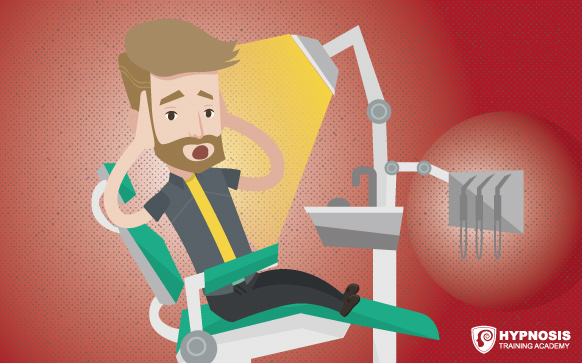
1) Functional Changes In Brain Activity After Hypnosis In Patients With Dental Phobia

Functional changes in brain activity after hypnosis 

This is a truly ground-breaking study.  It’s the first one to study the effects of various areas of the brain before and after hypnosis in people with dental phobias.

While it’s a relatively small sample size, it’s a push in the right direction. Out of the 24 people involved in the study, 12 were dental phobics and the other 12 were the control group.

This study illustrates the fact that anxiety-provoking stimuli can be reduced via hypnosis. This includes the actual dental surgery, endodontic treatments, and a low amount of anesthesia.

It also shows that the fear centers of the brain changed as well.

Using fMRI (function magnetic resonance imaging) various fear structures of the brain were researched.

The conclusion so far is hypnosis is a powerful method inhibiting reaction of fear circuitry structures in dental phobics.

2) The Effects Of Hypnosis & Music: Breast Biopsy


Effects of hypnosis and music: Breast Biopsy

When it comes to hypnosis or music helping to reduce the anxiety of getting a breast biopsy – hypnosis wins hands down.

For this study, 75 breast biopsy patients were randomly assigned to 3 different groups.  A control group, a music only group and a hypnosis/music group.

Before the breast biopsy the group exposed to music had less stress and anxiety.  Here’s where it gets interesting – the hypnosis with music group had a reduction in stress, anxiety, depression, and an over increase in optimism.


Saturday, January 21, 2017

[HYPNOTIC GUIDE] The Top 10 Hypnosis Trends In 2017 & What They Mean For You As A Hypnotist

[HYPNOTIC GUIDE] The Top 10 Hypnosis Trends In 2017 & What They Mean For You As A Hypnotist

Hypnosis has been around since at least the 1700s. Back then, Franz Mesmer, an Austrian physician, referred to it as “animal magnetism” or “mesmerism.” More than 300 years later, hypnosis has evolved and remains in use today. In fact, its popularity still keeps growing steadily.
But before hypnosis was accepted as a form of therapy it was widely used as a form of entertainment. Gradually it gained attention as a highly effective, non-invasive and respected form of therapy.
Now more than ever hypnosis is a highly relevant practice. That’s why as a hypnotist, it’s important to stay on top of current and emerging trends in hypnosis.
As a rule, hypnosis won’t suddenly switch course because of new trends in the way that, say, technology does.
It’s more likely to have slow-burning issues which eventually expand in popularity and the hypnosis community adapts techniques and strategies to address new needs.
That’s why it’s a good idea to start the year off with some ideas of what to keep an eye out for in 2017. Which is why we’ve put together some of thebiggest changes and trends to get you started.

1.Traditional Treatments Are Evolving

As a therapy, hypnosis is frequently used to help people stop smoking, lose weight and gain confidence. Successful treatment for these problems is how many people have come to understand hypnosis’ incredible potential.
Of course, these issues will still be around in 2017, but a few more “modern” twists on the problems have come to light. In hypnosis, therapy has expanded to include treatments for…

E-cigarettes Or “Vaping”: Kicking The Habit

Recently, in an attempt to stop smoking, people have been turning to ‘vaping’ (electronic ‘cigarettes’) as an alternative. Unfortunately, recent studies from the American Association for the Advancement of Science reported vaping may not be as harmless as originally believed.
The toxicology study took cell samples from the nostrils of three categories of people: those with a history of smoking, a history of vaping, and those who never smoked or vaped.
Next, the activity levels of 594 genes associated with the body’s ability to fight infections within the cells were measured.
Within the group of smokers, 53 of the genes were found to have diminished activity, as was the case in people using e-cigarettes.
Additional studies have found that the liquids and flavorings used in e-cigarettes suppresses the cell function meant to fight infection and has a negative impact on the nasal passages, lungs and bloodstream.
As these findings are becoming public knowledge and people become more aware of the considerable health risks associated with vaping, many e-cigarette users will likely need help to wean themselves off the habit. And as hypnosis is a widely known and respected treatment used to help people quit smoking, it’s likely hypnotists will start seeing more “vaper” subjects.

Weight Loss & The Virtual Gastric Band

When it comes to weight loss, the use of hypnosis has expanded to include weight control as an effective way to help people gain weight or maintain a healthy weight.
Specifically for weight loss, a common technique is the hypno gastric bandwhich continues to gain popularity as a non-invasive alternative to the surgical procedure.
University of Hull is conducting clinical trials to compare the effects of Virtual Gastric Bands with Relaxation Hypnotherapy and following a self-directed diet.
It’s also worth noting, a clinical trial implies that Relaxation Hypnotherapy has become acknowledged as an effective weight loss practice and potentially a better alternative to surgery. This is a huge step forward for the recognition of hypnotherapy by the academic and medical community

Thursday, December 29, 2016

Stuck In A Self-Hypnosis Rut? Try These 13 Powerful Induction Methods To Induce A Deep Trance – 2nd Edition

Stuck In A Self-Hypnosis Rut? Try These 13 Powerful Induction Methods To Induce A Deep Trance - 2nd Edition

When it comes to inducing a deep, self-hypnotic trance, a common misconception is that there is a magical, fool-proof method.

There is not.

The secret sauce is actually much more localized, specific to each individual’s practice.

If you haven’t guessed, it all boils down to you.

To what your mindset is, and your willingness to persevere if you hit a brick wall.

One reason many people fail at self-hypnosis is because they tend to focus on the method first, and when this doesn’t work, there is a strong temptation to give up and let out an exasperated exhale.

Needless to say, this is not a very effective approach. Which is exactly why we encourage the opposite.

In order to master self-hypnosis, you need to first focus on mastering yourself, and only then use an induction method to get you into a trance.

A little like how if you’re a hypnotist, you need to set a positive intention (your H+) before putting a subject into trance.

If you rock up to the session in a grumpy mood feeling distracted, no matter which techniques you use, they’re not going to work.

Your mood will rub off on your subject. If you have trouble going into a trance first (going first), and setting the tone you want your subject to experience, how do expect them to reach the desired state?

The same is true when you practice self-hypnosis. You need to set your mental state first, and only then use your desired induction method.

How To Set The Right Mental State For Self-Hypnosis

Having a go-to induction method can be useful as it helps your brain get into sync and quickly get down to business.
But of course, no two days are the same. What works for you one day may be less powerful on another, depending on your state of mind.

So mixing things up by using different techniques can be a useful way to keep the conscious mind stimulated and focused before you sink into a deep trance.

But before starting with an induction method, it is important to remind yourself of why you want to get into a trance.

The reason self-hypnosis is so powerful is because of how it gives you the ability to gain access to the unconscious, which is why it’s a fantastic tool for tapping into creativity, abundant mindsets, problem solving – among many other things.

So having a clear idea in advance of what you want to achieve during self-hypnosis will set you off on the right foot.

However, it is the gaining access to your unconscious that often poses the greatest challenge. If you’re having trouble inducing yourself into a hypnotic state, do not get frustrated.

What may appear to be a problem is a learning opportunity for improving your ability to go under.

Continue reading, to know how to overcome the obstacles while inducing yourself into a hypnotic state. Read on to know the interesting tips about self hypnosis and the ultimate hypnosis technique to go into deep trance

Wednesday, December 14, 2016

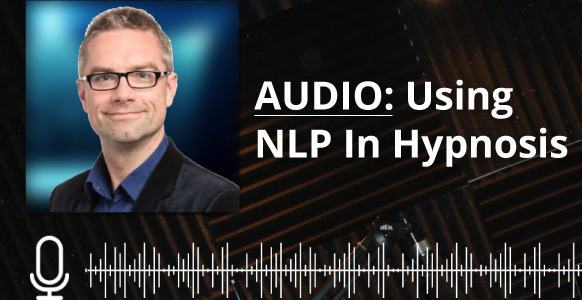
[AUDIO] Interview With Master NLP Practitioner & Hypnosis Trainer: Martijn Groenendal Reveals How NLP Will Make You Better Hypnotist

Interview With Master NLP Practitioner & Hypnosis Trainer: Martijn Groenendal Reveals How NLP Will Make You Better Hypnotist

Hypnosis & NLP.

These two worlds often crossover.

So today we have Martijn Groenendal, NLP and master hypnosis trainer here to clear up any confusion in case you’ve ever wondered where to focus your own practice and training.

As you listen to the audio, you’ll notice NLP and Hypnosis do have a lot in common. Milton Erickson, the father of hypnosis, was one of the "therapeutic wizards" who inspired the linguist-mathematician duo Richard Bandler and John Grinder to figure out a "recipe" for the most effective therapeutic model to teach others.

The outcome?

Neuro-Linguistic Programming.

In terms of methodology, NLP is a collection of structures, strategies and techniques to help you change your internal dialogue. The idea is to change the "pictures and movies" in your mind because if you think different, you feel different and then you start to behave differently.

Hypnosis on the other hand uses a more open and creative way to communicate with the unconscious mind.

But what most people don’t realise is how NLP and Hypnosis reinforce one another and actually work most powerfully when used in combination.

As Martijn eloquently puts it "Hypnosis taught me everything about NLP and NLP taught me everything about Hypnosis."

So go ahead and listen to Martijn’s experience with NLP and Hypnosis to understand how he puts them together to create "through the roof" results for his clients.

Thursday, December 1, 2016

How To Read Someone’s Mind: 5 Ethical Hypnotic Mind Reading Techniques So You Can Be A Force For Positive Change – 2nd Edition

How To Read Someone’s Mind: 5 Ethical Hypnotic Mind Reading Techniques So You Can Be A Force For Positive Change – 2nd Edition

Wouldn’t it be great if you could uncover a fact about someone that they hadn’t yet divulged to a living soul, and then use this information to enrich their life?

This is exactly what Milton Erickson regularly did. He was renowned for making unbelievable - yet accurate - predictions about people.

He once astounded a doctor colleague of his by congratulating her on her pregnancy.

This sounds all perfectly normal, you might be thinking.

But where things venture into the unusual is due to the fact that she had literally only just discovered that she was pregnant. She was yet to reveal the exciting news to anyone.

So how did he do this? Not even the baby’s father was aware of the pregnancy at this stage.

Although Erickson’s insight seemed like magic, he had, in fact, simply used his powers of observation.

And no, it wasn’t because she was showing either - as there was no obvious baby bump in sight.

However, he did happen to know about a condition known as Chloasma. This can develop in some pregnant women, and causes a mark (not dissimilar to skin pigmentation) to appear their forehead. This is also sometimes known as the "mask of pregnancy."

So rather than having some magical power, Erickson had observed that his colleague’s forehead bore this mark, so after presuming that she was pregnant, he congratulated her (while obviously astounding her in the process).

What Is Hypnotic Mind Reading And How Does It Work?

For hypnotists, language is all important and the words you use can either help or hinder you.

It’s important to be aware of the ways in which Hypnotic Mind Reading differs from Psychological Mind Reading.

Hypnotic Mind Reading should always be used to enrich someone’s life and be based on observations you make about a person. It should never be based on lies or deception!

But when used ethically, Hypnotic Mind Reading is an absolute killer way to bypass the critical factor - helping you to access a subject’s unconscious mind and get to work with helping them overcome whatever issue they’ve come to you for.

Meaning this technique is very effective when working with resistant subjects. But we can’t reiterate enough - using this kind of technique is only warranted when you have the intention of actually helping a subject. It should never be used for your own or someone else’s benefit.

Basically, it goes back to hypnosis ethics 101 where you only use this powerful skill to be a force for good in the world.

Psychological Mind Reading, on the other hand, is generally used for entertainment and is designed to be deceptive.

Here is a case study which is a prime example of how it is used in entertainment.

Psychological mind reading in the entertainment industry

Keep reading to know more about hypnosis mind reading methods explained and demonstrated by hypnosis experts at Hypnosis Training Academy.