Tuesday, June 27, 2017

[SPECIAL EDITION] 19 Top Hypnosis Training Academy Articles: Powerful Resources To Enhance Your Hypnotherapy, Conversational Hypnosis, Self-Hypnosis & Hypnosis Skills

https://hypnosistrainingacademy.com/top-hypnosis-training-articles/?utm_campaign=linkb&utm_medium=article-to-bp&utm_source=hta-blogspot&utm_term=CT 

You may have noticed that the Hypnosis Training Academy is packed with hypnosis resources.

But all of this content has one thing in common when it was mindfully created: to guide, teach and nurture you through your hypnosis training journey and pursuit of mastery.

After all, as Pablo Picasso famously said:

“The meaning of life is to find your gift. The purpose of life is to give it away.”

While Pablo might have coined this quote first, it really is the reason why this blog even exists.

But we admit, with so much content to sink your teeth into, it can be a little daunting knowing where to start.

Which is why we thought it would be a nifty idea to compile a list of our “greatest hypnosis hits” so to speak – minus any one hit wonders, that is.

The articles listed below have been our most popular among our readers in their quest to be a powerful force for good in the world using the power of hypnosis.

To help you navigate through this list, we’ve broken the posts up into 4 categories: ethical conversational hypnosis, hypnotherapy, self-hypnosis and general hypnosis.

BONUS!

And for the ultimate guide on hypnosis training, where master hypnotists Igor Ledochowski and Karsten Küstner reveal their top advice and recommended training resources for beginners, intermediates and advanced hypnotists, don’t miss “What Type Of Hypnosis Training Should I Do?” The Ultimate Guide For Novices, Intermediates & Seasoned Professionals (PLUS: Videos & Further Training Resources)

So let’s get cracking. >>

Read them, share them and never stop enhancing your hypnosis skills! 

Thursday, June 22, 2017

How To Do A Hypnotic Instant Induction That Releases Negative Energy [Igor Ledochowski VIDEO]


The Hypnotic Instant Induction That Releases Negative Energy
Hypnosis may be the bearer of many misconceptions.

But one thing you can’t dispute is how it captures and teases people’s imaginations.
And one technique in particular that never fails to do just that is a hypnotic instant induction.
As let’s face it, even the “non-believers” are in awe at the sight of watching someone be put into a deep trance at the drop of a hat (or for the purpose of this article, a pocket watch).
But the other inspiring thing about instant inductions is the type of change work you can do in a very short time as a hypnotist.
Igor Ledochowski demonstrates how to do a hypnotic instant induction, in addition to giving a very practical and rewarding gift: the ability to release negative energy.

So check it out...

Tuesday, June 20, 2017

Ultimate Guide On Hypnosis Training: Hypnotists Share Proven Advice For Novices, Intermediates & Seasoned Professionals (PLUS: Videos & Further Training Resources)

Ultimate Guide to Hypnosis Training Welcome to the ultimate guide on hypnosis training.

In this 3-part guide, you’ll be taken on a journey.

One that will reveal what type of hypnosis training you should do in order to go from being a novice to hypnosis master.

While accomplishing the latter will take longer than the time it will take to read this guide (sorry, this isn’t a quick fix to mastery) you’ll get a very clear idea of how you can hone, improve and advance your skills as a hypnotist.

In essence, consider it as your complete guide to hypnosis training. A road map that’ll arm you with insider tips, resources and training programs to transform you into a confident and proficient hypnotist.

For ease of use, this guide has been broken into:

Part 1 – Hypnosis Training For Beginners – Click Here To Read
Part 2 – Hypnosis Training For Intermediates – Click Here To Read
Part 3 – Hypnosis Training For The Advanced – Click Here To Read

But first, you might be wondering…

“What Type Of Hypnosis Training Should I Do?”

To answer this question, you first need to identify why you want to use hypnosis.

If you want to become a professional hypnotherapist to help people overcome problems such as fears, phobias and mental illnesses, it’s recommended that you use a variety of training methods, such as: online hypnosis training programs, attend live training seminars, get your hypnotherapy certification, and if you want to really master hypnosis, that you get your hypnotherapy diploma.

But if you just want to learn hypnosis to improve the way you communicate, or to become more influential in your everyday life, there are a host of online training programs that will certainly help you reach your goal (some of which are listed in this article). You can also join local hypnosis Meetup groups, or attend a live hypnosis training seminar to further help hone your skills.

Now let’s take a look at each of these training methods below…

PART 1: Beginner’s Guide To Hypnosis Training

Let us be the first to congratulate you on embarking on this meaningful and worthwhile journey.

As you’re probably already aware, hypnosis is a powerful change work tool that can be used to not only positively transform your own life – but the lives of your family, friends, community and, well, the world.

Yes, really – the world. We’re not exaggerating here – we believe it to be true.
And if you too have even an inkling that this is possible – and you share this positive intention – then we’ve got good news for you.

Because you’re about to learn how you can become the kind of hypnotist who’s able to spark powerful and lasting transformations in others.
And because you’re about to get your feet wet, we thought it would be a good opportunity to briefly share the backstory of the founder of the Hypnosis Training Academy, Igor Ledochowski.

You see, Igor wasn’t always a master hypnotist. In fact, he used to be a lawyer.

So his road to mastery hasn’t always been plain sailing. He’s come across many obstacles in his path to mastery.

But the best part about this?

Since starting the Hypnosis Training Academy, Igor’s mission has been to openly share what’s worked for him (and what hasn’t).

So whether you want to learn ethical conversational hypnosis, hypnotherapy, or self-hypnosis… or you just want to learn some basic hypnosis techniques and have fun – we’ve got your back.

Visit HypnosisTrainingAcademy.com to check out this complete guide and discover what type of hypnosis training you should do from the master hypnotists Igor Ledochowski and Karsten Küstner.

Friday, June 16, 2017

15 Incredibly Effective Hypnotic Power Words To Ethically Influence Others (And How To Use Them) – 2ND EDITION

15 Incredibly Effective Hypnotic Power Words To Ethically Influence Others (And How To Use Them) – 2ND EDITION

When it comes to hypnosis, one tool is more powerful than all the others put together.

You might even say that, without it, hypnosis would be impossible.

And that tool is: words.

Sounds simple, doesn’t it?

To be a hypnotist, you just need to be able to use words. Anyone can do that. So why isn’t everyone able to hypnotize everybody else?

Because they aren’t just any old words.

Hypnotists use specific words and phrases to help people imagine possibilities, which means they need to choose their words with care.

We call those choice words power words (or hypnotic power words).

But here’s the thing:

Power words aren’t really anything different than the words you use on a daily basis.

Whether you’re answering the phone, talking to a neighbor, or discussing an idea with a colleague.

They’re not secret words given to hypnotists when they reach a certain level. You don’t have to be a grand master to be able to use them.

They’re not reserved for a select few who are privileged to speak them after years of study.

No.

What makes them power words isn’t necessarily the words themselves, but the way in which they’re used.

Yep, that’s really the secret behind making them "hypnotic."

Which is why we decided to expand upon this original blog post (which previously only listed 3 power words) to give you a list of 15 so you can fine-tune your hypnotic language skills – regardless of whether you’re working with a hypnosis client, or you’re looking to improve your communication skills.

(And as an added bonus... we’ll later reveal how you can up your hypnotic language repertoire with 70 different power words and phrases!)

But in the meantime, let’s discuss why...

All Words Have Built-In Magical Power

Why are words so cool?

How is it possible to use words that everybody knows and somehow put a person into a trance?

To find out, let’s briefly look at the character of words in general.

Suppose someone told you to imagine yourself biting into a lemon. Without having a lemon in your hand, you can still do it.

You can feel yourself biting into the yellow flesh. You can feel the juice squirting out and dripping everywhere.

You can taste the bitter citrus that almost sets your teeth on edge.

You can smell the lemony scent as it tingles your taste buds and works its way up into your nostrils.

And even without holding a lemon in your hand, or biting into it, your saliva glands somehow get activated.

That’s what words can do. They’re capable of:

  • Stimulating your imagination
  • Distracting you
  • Painting pictures in your mind
  • Activating your senses
  • Creating associations
  • Linking two things that wouldn’t normally go together
  • You’ve probably heard the expression "cool as a cucumber" – but does it make any sense?
Cucumbers aren’t particularly cool, unless they’re kept in the fridge. Go to any garden plot and touch one. Nope, no cooler than the pumpkin growing next door.

That’s what makes words so cool. Stick a couple together in an interesting phrase, and BAM! You’ve got a winner that everybody remembers. And once you know how hypnotic power words work, that’s what will make you a fantastic hypnotist.

The Big 5 Hypnotic Power Words

There are dozens of power words you can use, so let’s start with what we’ll call the Big 5. They are:

1. Because

Example: "You’re listening to me, you can relax, and because you’re relaxing, you can feel comfortable because comfort builds more relaxation, so you can relax even more comfortably and because you’re relaxing right now, you can feel more comfort developing inside you."

2. And

Example: "You can relax and feel comfortable, and the comfort you feel will make you relax even more, and the more you feel the comfort, the more you’ll relax. And as you relax, you’ll feel more comfortable. As you feel more comfortable, you’ll relax more and more. Relaxing more and feeling comfort is important for relaxation, so as you relax and feel comfort and relax even more and feel even more comfort."

3. As

Example: "As you listen to my voice, you can start to focus your attention inside. As your attention focuses inward, so your unconscious mind begins to take you into trance. As you breathe in and out, you will notice an ever deepening comfort starting to develop."

4. Imagine

Example: "Can you imagine going into trance? Imagine yourself drifting on a calm and beautiful river. Picture your muscles becoming loose and limp. See yourself feeling completely relaxed. Then imagine enjoying the most exquisite trance experience."

5. Which Means

Example: "You have been studying these language patterns for some time now, which means that you are learning something of tremendous value. The fact that you are reading this right now means that you are learning at the unconscious level..."

You can see that these are just ordinary words, but their power comes from how you put them to use.

If you’re interested in discovering more power words and phrases that pack a serious hypnotic punch, then keep reading here »
 

Wednesday, June 7, 2017

What Hypnosis Feels Like: How To Explain The Somewhat Unexplainable & 3 Powerful Hypnosis Stories

What Hypnosis Feels Like: How To Explain The Somewhat Unexplainable

“What does hypnosis feel like?”

That’s a question hypnotists and hypnotherapists get asked a lot. And naturally, as a hypnotist, you want to give a good answer.
You want to be able to explain the feeling so that it helps them understand it better. You want to provide a reasonable answer that doesn’t just fob them off. Especially because some of the people who ask the question could someday become your subjects.
So what can you tell them?
The truth is that it’s not an easy question to answer for 3 very good reasons:
  1. The experience of hypnosis is different for everyone
  2. For some people, hypnosis might feel different every time
  3. It isn’t a “one-size-fits-all” type of experience
Hmmm. Those 3 points could leave you scratching your head. If it’s different for everyone, how can you possibly tell someone what hypnosis feels like?
The answer is clear: You tell them what it MIGHT feel like. What they might experience. What happens to most people.

Useful Tip: When asked to explain what hypnosis feels like, reel off the 3 points above. Give examples of experiences reported by other people, such as your own subjects or your friends or relatives who’ve undergone hypnosis.

Then, if during hypnosis they don’t experience something, or if their experience is slightly different, at least you’ve prepared them for that eventuality in advance.

Keep Reading to know What Someone Might Expect To Feel During Hypnosis and discover how to explain the somewhat unexplainable with 3 Powerful Hypnosis Stories from Hypnosis Training Academy.


Monday, June 5, 2017

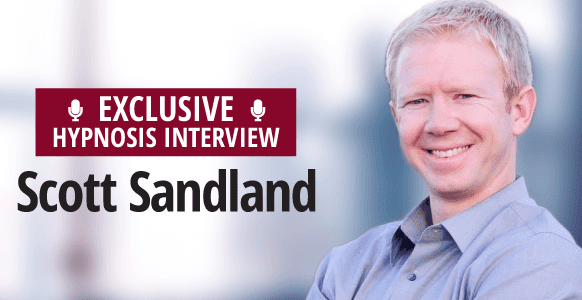
Interview With A Hypnotist: HypnoThoughts Founder Scott Sandland Shares How To Set Up A Practice For Pain Control, Addiction & Dental Hypnosis

 How To Set Up A Practice For Pain Control, Addiction & Dental Hypnosis

How do you know if a hypnotherapy niche is right for you?

Other than actually giving it a try, the most practical alternative is to talk with someone who works in the field.

This way, you get real-world insight to help you determine whether the niche is a good fit and advice on what it will take to succeed.

Which is why given the rising interest in hypnosis for medical and dental applications, this month’s interview features master hypnotist – Scott Sandland.

You may already be familiar with Scott Sandland as the creator of the largest free hypnosis social network, HypnoThoughts.

But perhaps what you didn’t know is that Scott is an expert in pain reduction, addiction treatment and dental applications of hypnosis.

In fact, Scott’s success has already led him to become the youngest member of the board of directors for the International Medical and Dental Hypnotherapy Association.

In this month’s interview with Igor Ledochowski, Scott shares the unbelievable story of how he discovered hypnosis.

Scott also dives into what you can achieve through dental hypnosis, what hypnosis can offer to people struggling with addiction and why this niche is not for everyone. He also shares plenty of advice on how to help you get started in this field of hypnotherapy.

To listen to Part 1 of this powerful interview, simply visit Hypnosis Training Academy’s interview post.

Tuesday, May 30, 2017

The Difference Between Meditation And Self-Hypnosis (And Why The Super Successful Make Them Part Of Their Morning Routines)

The Difference Between Meditation And Self-Hypnosis

Morning.

The dawn of another day.

A fresh start and the beginning of a brand new adventure.

And for most successful people, it’s their morning routine that shifts them into gear.

So they can face whatever gets thrown at them with confidence and a clear head.

Sure, doing the same thing every morning might seem boring in one sense… but look at it this way.

A routine means you don’t have to think about what you’re doing when you crawl out from under the sheets.

You know exactly what steps you’re going to work through.

You know what food you’re going to eat, what papers you’re going to read, or what actions you’re going to take.

It might not be the most exciting part of the day, but it doesn’t have to be.

You’re not doing it for the thrill. You’re doing it to gently revive your body and mind.

And because it’s the same old thing, day after day, you can just get on with it.

You don’t have to labor over it.

That gives you the time and space to collect your thoughts. To get ready for another busy day.

To enjoy a few moments of peace and solitude before your hectic schedule takes over.

But what’s the best way to go about it?

Not surprisingly, some of the world’s most successful entrepreneurs do a lot of the same things.

And one technique many of them have in common is… meditation.

Famous Faces Who Spend Their Mornings Meditating

What’s so special about meditation?

People who practice it all say the same thing. It makes them feel better. Better about themselves and about the world around them.

Some of the benefits they claim to enjoy include:
  • Lower stress levels
  • Greater mental clarity
  • Sharper thinking
  • Enhanced productivity
  • Improved overall health
And all of that from just sitting still.

Self-help guru and motivational speaker Tony Robbins says meditation changed his life. He recommends doing an “Hour of Power” every morning, which for him involves a combination of visualization and positive affirmations.

Director David Lynch of Twin Peaks fame meditates twice a day, every day. He credits the practice with giving him energy, creativity and a deep inner satisfaction.

Ray Dalio, the founder of the world’s largest hedge fund Bridgewater Associates, says that meditation is responsible for his success. He claims it helps him stay centered, stay creative, and maintain a healthy and peaceful life.

So if meditation can bring all of that, why isn’t everyone doing it?

Could it be that on some level they just don’t think it will work?

Or that they need some kind of spiritual guru to guide them?


Keep Reading to find out everything about meditation and how you can achieve the same things, and much more, using self-hypnosis?

Check out the complete article at HypnosisTrainingAcademy.com find out why the most successful people have made meditation and self hypnosis part of their daily routines.